Welcome To CCAR
Welcome to CCAR
Home.. Projects.. Facilities.. Interactive Map.. Business Incubator.. In the news.. Contact Us..


Demonstration of atlantic Halibut Aquaculture


Background

Farming of the Atlantic halibut (Hippoglossus hippoglossus) in Maine has been an objective of policy makers, researchers and the aquaculture industry for several years. Recent developments in this state, spearheaded by the University of Maine’s Center for Cooperative Aquaculture Research (CCAR), bring halibut farming closer to commercial reality. In 1999 the University purchased land-based finfish farming facilities, previously operated by a commercial salmon producer. The CCAR has laid the foundations for the development of the halibut industry, first by collecting and acclimating one of the largest collections of broodstock Atlantic halibut in the world, and then by developing the facilities to rear the juvenile fish and to ongrow them to harvest weight. Maine Halibut Farms Inc (MHF) was formed in 2003 to commercialize Atlantic halibut farming in Maine. The company is currently using the business incubation facilities and halibut juveniles reared at the CCAR to test the technical and economic feasibility of the venture.


Progress to date

Over the last 8 years, over 200 broodstock fish either caught from the wild by long line in the Gulf of Maine or Nova Scotia or grown to maturity from hatchery reared populations have been acclimated in specially designed facilities at the CCAR. Some of these fish started to spawn in the 2004 and by the 2007 spawning season most of the mature fish were producing gametes. The original population of 40 wild caught Gulf of Maine fish has been the subject of a broodstock nutrition trial and to these we have added further fish from our F1 groups.

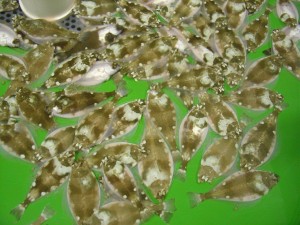
A commercial scale hatchery designed to rear a variety of marine fish juveniles, including Atlantic halibut, was completed in 2005. Juveniles produced in this new facility will be made available to commercial operations such as MHF in Maine. Juvenile halibut reared in 2005 and 2006 are already being grown on by MHF in specially designed facilities housed in our business incubation facilities. The first module, with a capacity of 5 metric tons, is a novel low head recirculating system. The lessons learnt from the operation of this module have been applied to the next phase, a 20 metric ton facility designed and by Nick Brown and his staff, which will serve as the prototype for the commercial scale farms. The incubator project will enable the potential for land-based halibut farming in Maine to be evaluated using realistic demonstration models providing the basic inputs to a business plan. Progressing on from the business incubator will be commercialization through expansion from demonstration to full-scale farming. The magnitude of this expansion and the size of each step taken to reach the final goal will depend upon financing, market opportunities and other factors.

 The primary objectives of this project are:


  • Demonstration of land-based halibut farming
  • Assessment of economics of farming halibut on land in Maine
  • Development of inputs required to write a realistic business plan; labor, equipment, power, feed etc.
  • To assess the market response to farmed halibut in the USA
  • Design of a low cost, low energy use recirculation system
  • Development of growth model for halibut in a land-based recirculation system
  • To minimize wastes and environmental impact from farming halibut on land
  • To start a family breeding program with wild and hatchery reared fish
  • Provide training for industry partners in all areas of production, system operation and fish health management and husbandry.

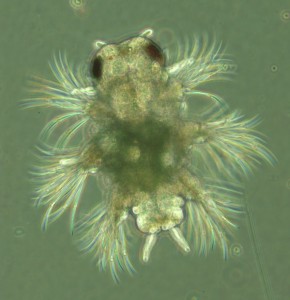
Halibut life cycle

Hatchery Production

To ensure long term supply of halibut juveniles a full sized commercial hatchery is required. The newly completed 24,000 ft2 marine finfish hatchery is among the most modern in the world and is designed to produce up to 500,000 halibut juveniles per year. As the ongrowing industry expands, it is expected that additional hatcheries will be constructed. Production of juveniles is expected to increase as follows


Year

Total juveniles

2005

3,000

2006

24,000

2007

0*

2008

100,000

2009

200,000

2010

300,000


* No production planned

Slide show presentation


Center for Cooperative Aquaculture Research, 33 Salmon Farm Rd, Franklin, ME 04634, USA
Fax: +1 207 422 8920
UMaine Logo