cages

More information:

Sebastian Belle, Maine Aquaculture Association, 207-622-0136, maineaqua@aol.com

Dick Clime, Coastal Enterprises Inc., 207-882-7552, rdc@ceimaine.org

The Cod Academy was featured in this Time Magazine video

Cod Academy film by Fieldstone Media

Cod Academy Graduation

Links:

Maine Aquaculture Association

Great Bay Aquaculture of Maine

Coastal Enterprises Inc.

Funded by National Oceanic and Atmospheric Administration


All Atlantic cod projects at CCAR:

2004 demonstration project

2006 partnership with Great Bay Aquaculture

2009 investigation of cod cataracts

2010 breeding program

2010 Cod Academy


Cod Farming for Maine's Commercial Fishermen

Phase 1 - Cod Academy Classes: Learning Fish Farming

Purpose: Train large boat fishermen from Hancock and Washington Counties in the necessary skills and knowledge of cod farming by offering a free course that consists of classroom and hands-on instruction. After attending the June informational meeting, fishermen who enroll will take classes, starting in mid-August and running 1 day/week for 12-15 weeks. Classes will be held in Franklin and Sorrento.

Partners: Maine Aquaculture Association, Great Bay Aquaculture of Maine, Coastal Enterprises Inc., Center for Cooperative Aquaculture Research of the University of Maine, with funding from the National Oceanic and Atmospheric Administration.

Overview: We believe that fishermen trained in cod farming and given the means to successfully make the transition from fishing to farming will offer eastern Maine working waterfront families an option to stay on the water. This training course and start-up business model was used successfully in Norway to assist herring fishermen become successful salmon farmers. It can work here with cod farming.

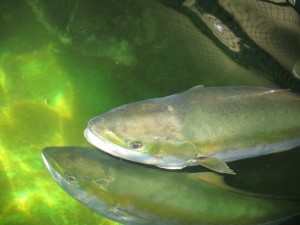
Cod is a native species that grows well in the Gulf of Maine
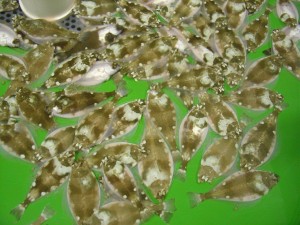
Juvenile cod are readily available through an experienced nursery located nearby.
Maine has a viable 10-cage cod farm that has pioneered the way, and will act as a training site.
Selective breeding of cod brood stock has entered its fifth consecutive year.
Cod is hardy and immune to most diseases that affect salmon.

Components

Eligibility

You must own a boat or have access to use of a boat through a family member or through a fisherman mentor and sponsor.
You must be currently fishing, have significant fishing experience, or come from a fishing family and be unable to acquire fishing permits.
Demonstrate financial capacity to self-finance or provide collateral for loan amounts up to $100,000.
Sign a letter of commitment promising to contribute the time and effort to complete the course.
Be free of regulatory fishing violations.
Informational Meetings: Two informational meetings are planned to describe the course and inform fishermen about cod farming in Maine and around the world. Schedule:

June 24, Ellsworth City Hall, 4-6 PM.
June 29, Univ. of Maine at Machias, Science Bldg. Room 102, 4-6 PM.
Application: Interested fishermen will determine their eligibility (requirements listed above) and fill out an application for mailing. Forms may be printed from this website following the June meetings, picked up at the meetings, or requested by phone. Completed applications should be mailed to the address on the form by Friday, July 19. Applicants may be asked to meet with a committee of the sponsoring agencies for a more in-depth conversation about their qualifications and interest. We anticipate that ten to fifteen qualified fishermen will be accepted.

Course

The course will be offered FREE and is scheduled to begin in mid-August, 2010. It will run for 12-15 weeks, one day a week, combining some classroom and some hands-on instruction. Hours and days will be flexible to allow fishermen to attend with a minimum of interference with their earnings. Teaching locations are at the University of Maine's Center for Cooperative Aquaculture Research facility in Franklin and at the Great Bay Aquaculture of Maine cage site in Sorrento.

Details

An outline for the classroom studies and hands-on segments will be presented at the informational meetings.
Presenters throughout the coursework will be knowledgeable and experienced people including a commercial fish farm owner, farm manager, feed company representative, University fish farming experts, business counselors, and fish farming consultants.
Weekly hand-outs will allow assembly of a resource manual kept by fishermen-students.
Students will develop a cod farming business plan as part of the course requirement. One on one business counseling will be offered.
Group instruction will be given on how to file a finfish aquaculture lease application with the state of Maine.
A video documentary of the project will be created to be used as a communication and outreach tool as well as recruitment tool for future training programs.

Phase 2 – Pilot Scale Single Cage Cod Farms

Purpose: To encourage Cod Academy course graduates to create their own cod farm businesses.

Timeframe: Tentative for the spring, 2011, a normal juvenile cod stocking period for cage culture. Timing of Phase 2 depends upon the resources available to organizers and to fishermen.

Program support goals

Transition successful graduates to ownership of their own Pilot Scale Cod Farms in which part of the upfront risk money (~50%) is theirs and the balance is planned to be subsidized for one harvest cycle.
Contingent upon grant support, subsidies for Pilot Scale Farms will be sought throughout 2010 by the project partners.
Pre-approved lease sites - assistance in acquiring alternative sites may be offered if requested.
Continuing technical assistance from Cod Academy partners and extension personnel available.
Great Bay Aquaculture of Maine will provide juvenile fish for stocking at a pre-arranged market rate.
Purchase of feed and veterinary services will be pre-arranged at market rates.
Markets for harvested fish can be arranged through Great Bay Aquaculture of Maine or by the fishermen/cod farmers through alternative outlets.